
English| EUR
Suggested for you
More currencies
Choose a language
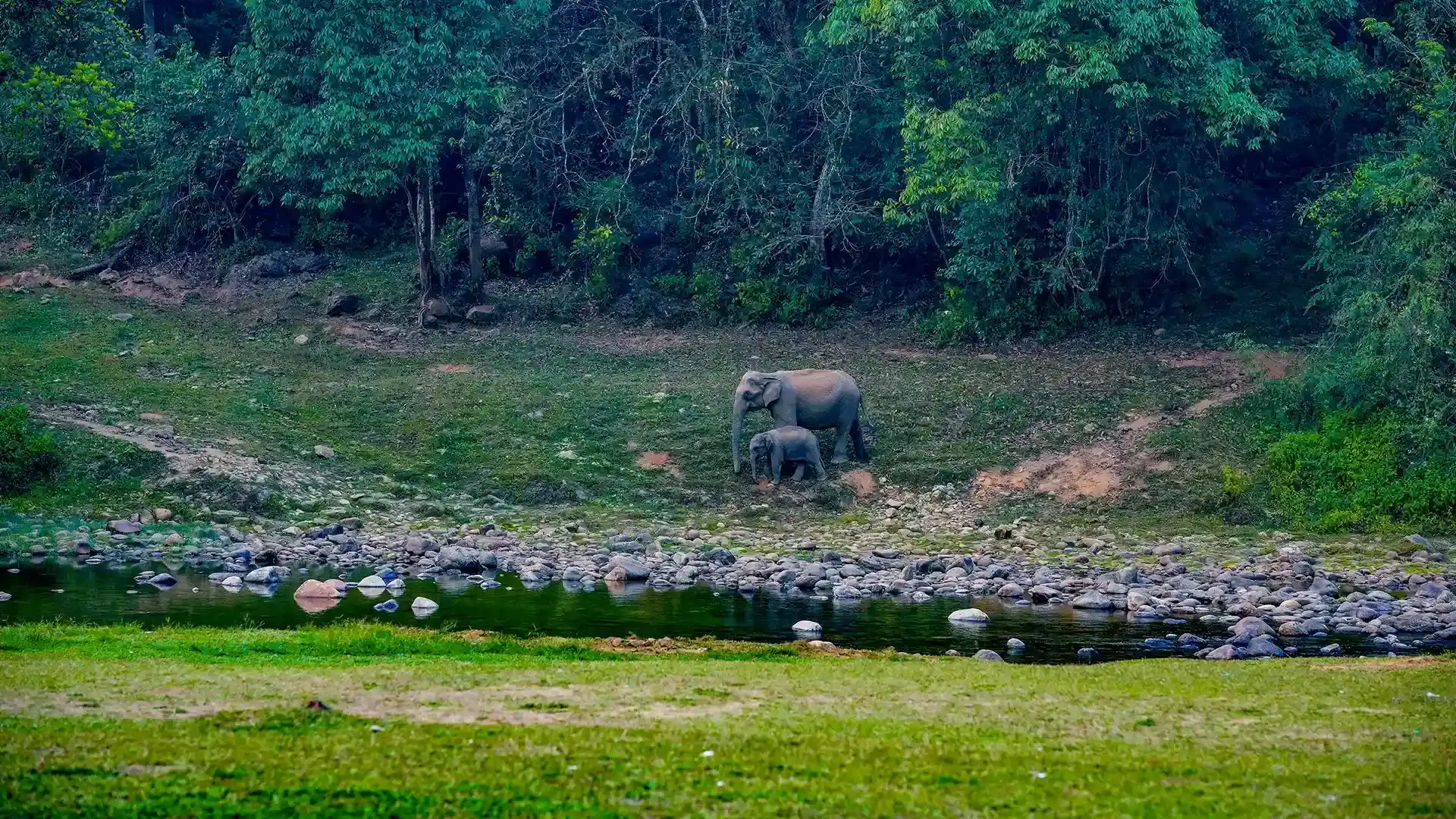
Anakulam's natural mineral-rich water spring draws wild elephant herds from the surrounding forests of Idukki District, creating one of Kerala's most predictable wildlife viewing opportunities. This guide covers the optimal arrival window, what the safari experience entails, and how to plan your visit to the public viewing area and guided jeep tours.
Quick answer
The public viewing spot at Anakulam is open 24 hours daily with free entry. Wild elephant sightings peak between 4 PM and 8 PM, when herds typically arrive at the mineral spring. Jeep safari tours operate through local operators with separate costs; the spring itself requires no entrance ticket, though safari bookings should be arranged in advance during peak wildlife season.
Wild elephants travel up to fifteen kilometers through dense forest to reach the mineral-rich water source at Anakulam, a behavior documented by forest researchers across three decades of observation in the Idukki highlands. The spring's unique mineral composition—high in sodium and trace elements scarce in the elephants' typical forest diet—makes it a nutritional necessity rather than a casual watering hole, which explains the reliability of evening arrivals even during the monsoon months when surface water is abundant elsewhere. The Anakulam wild elephant jeep safari operates in two modes: self-drive visitors who park at the public viewing platform, and guided jeep tours that venture along forest-edge tracks for closer vantage points under the supervision of trained naturalists. The platform overlooks the spring from a safe elevation, allowing unobstructed views of herds as they descend the slope, interact at the water's edge, and rest in the clearing. Jeep safaris navigate a network of service roads originally cut for forest management, bringing participants within fifty to seventy meters of feeding zones while maintaining protocols established by the Kerala Forest Department. Both approaches offer legitimate encounters; the choice hinges on whether you prioritize autonomy and cost control or interpretive depth and flexible positioning. Elephant activity at the spring follows a diurnal rhythm tied to temperature and human movement in surrounding areas. Herds avoid midday heat and the noise of passing traffic on the Mankulam road, concentrating their visits in the late afternoon and early evening when the forest quiets and temperatures drop. Sightings taper sharply after 8 PM, though nocturnal visits do occur—the platform remains accessible around the clock for those willing to wait in low light. Dry months from December through March see the highest visitation rates, with groups of eight to twelve individuals common and occasional gatherings exceeding twenty elephants when multiple family units converge. The wet season reduces frequency but not reliability; even in July and August, patient observers report encounters on seven out of ten evenings. Local jeep operators based in Mankulam and Anakulam village coordinate departures to align with peak activity windows, typically offering two-hour circuits that combine spring observation with broader forest transects where gaur, sambar deer, and Nilgiri langur are regular secondary sightings. Safari bookings are handled independently by each operator rather than through a centralized system, so advance contact—particularly during Indian holiday periods and the December-January visitor surge—prevents last-minute availability gaps.
“Wild elephants travel up to fifteen kilometers through dense forest to reach the mineral-rich water source at Anakulam, a behavior documented by forest researchers across three decades.”
The best arrival window is 16:00–20:00, which serves as the optimal time for wild elephant sightings at the natural mineral-rich water spring. Observing these animals requires patience during this specific period when they congregate to consume the mineral-rich water.
Cooler temperatures 15°C to 25°C
This period offers comfortable weather for jeep travel and higher chances of consistent sightings.
Warm and dry 22°C to 35°C
Elephants frequent the water source more often due to the dry forest conditions.
High humidity and monsoon rains
Rainy conditions can make access roads difficult, though elephant activity remains frequent.
Mild temperatures 20°C to 28°C
The post-monsoon climate provides a balanced environment for wildlife observation.
Verdict: For the highest probability of observing wild elephants, plan your safari arrival between 16:00 and 20:00 during the drier months of March to May.
The Anakulam wild elephant viewing area is accessible to visitors daily throughout the week. The site remains open for public access at all times.
Access to the public viewing spot at Anakulam is free of charge. Costs for the area are primarily associated with the independent arrangement of jeep safaris to reach the location.
Verdict: Public entry to the viewing area is 0 INR, while total travel costs depend on the vehicle safari rates negotiated with local operators.
Anakulam is situated in the Idukki District of Kerala, accessible primarily by road through the hilly terrain near Mankulam. Most visitors reach the site by driving from Munnar or nearby towns to reach the village located at Anakulam, Mankulam, Idukki District, Kerala, 685565, India.
Munnar-Mankulam Road to Anakulam village
KSRTC bus to Mankulam, then local transport
Private hire from Munnar to Anakulam
The final approach involves rural roads that are best navigated by local jeep operators familiar with the terrain. Arrange your transport in advance to ensure reliable access to the village viewing area.
Preparation and respectful observation practices ensure a successful experience when visiting the elephant habitat in Anakulam.
Wild elephants are sensitive to noise; keep voices low and avoid sudden movements to prevent startling the herd.
Turn off camera flashes and mobile phone lights to avoid disturbing the animals during evening sightings.
Wear long trousers and sturdy, closed-toe footwear to protect against insects and navigate uneven ground near the viewing area.
Anakulam is an ecologically sensitive zone; carry all personal trash back with you and dispose of it outside the forest area.
Request that your driver turns off the jeep engine upon arrival at the viewing spot to minimize both noise and exhaust fumes.
Stay strictly within the designated viewing zones provided by your guide, as these areas are established for both visitor safety and animal welfare.
Everything you need to know about anakulam wild elephant jeep safari
The optimal time to spot wild elephants at the natural water spring is between 16:00 and 20:00. Arriving during this window maximizes your chances of seeing the herd congregate at the mineral-rich site.
The public viewing spot itself has an entrance fee of 0 INR. Please note that while the viewing area is free, any costs associated with a private jeep safari service are handled separately by local providers.
You can arrange your visit through local transport services in the Mankulam area. Our site provides links to booking resources to help you secure a vehicle for your excursion.
Yes, families are welcome to join the elephant observation trips. It is a nature-based experience that can be educational for children, provided they remain quiet and respectful of the wildlife and habitat.
While the viewing area remains accessible, wildlife sightings are most frequent during the late afternoon and evening. Outside of these hours, your chances of seeing the elephant herd at the water source are significantly lower.
Yes, the area is open to visitors from Monday through Sunday, 00:00–23:59. You can plan your trip for any day of the week, though you should align your arrival with the best viewing window.